Abstract: Thorough removal of oral biofilm remains a challenge even with twice-daily hygiene, due largely to extracellular polymeric substance (EPS) matrix structures in biofilm. EPS provides structural cohesion to biofilm, impeding its removal through mechanical and/or chemical means. Recently, a novel approach to biofilm cleaning was introduced using hops beta (β)-acids (Activ Bio-Cleanser™) as a surfactant in toothpaste formulations. This introductory article highlights evidence presented in this special issue showing the surface-active properties of hops β-acids that allow it to modify the EPS matrix and enhance oral hygiene efficiency. Research presented in this special issue includes mechanistic, ex vivo, and in vivo findings demonstrating the ability of hops β-acids to disrupt biofilm through actions on EPS, enhance removal of adherent biofilm, and improve the accessibility of active ingredients (eg, stannous fluoride). This collective body of research shows the benefits of utilizing hops β-acids as a transformative toothpaste ingredient.
Despite widespread professional recommendations for twice-daily toothbrushing, residual oral biofilms and associated problems related to poor oral hygiene often persist in areas that are difficult to access mechanically or are missed due to ineffective toothbrushing technique.1,2 It is well recognized that routine brushing does not readily reach certain regions of the oral cavity, such as interproximal surfaces, gingival embrasures, pits and fissures of posterior teeth, and the crypts of the tongue dorsum, causing these areas to serve as reservoirs for biofilm accumulation. These retained biofilms may negatively impact all aspects of a patient’s oral hygiene.3,4 While mechanical brushing remains the foundation of oral hygiene, its limitation in accessing these sites hinders hygiene efficacy. Therefore, improving the ability of oral care formulations to effectively clean and control biofilms in hard-to-reach areas, where adherent oral biofilms persist, represents an important opportunity for enhancing overall oral care.5
The EPS Matrix: A Structural Barrier in Oral Biofilms
A defining feature of oral biofilms is the presence of an extracellular polymeric substance (EPS) matrix that confers structural cohesion and limits both mechanical removal and chemical access.6,7 Oral biofilms are not simple microbial accumulations but rather highly organized, heterogenous structures in which microorganisms are embedded in many different subdomains of extracellular polymers.8 The heterogenous structure of EPS acts as both a physical and chemical impediment to mechanical removal and penetration of subsequently delivered active materials while simultaneously providing a fertile home for oral bacteria that is, by evolution, difficult to remove. Its heterogeneity lies in its chemical and structural variety comprising hydrophilic continuous domains, insoluble glucan scaffolds, amphiphilic protein/matrix interfaces, lipophilic microdomains, and extreme charge variation.9-14 Addressing the biofilm structure directly, instead of just the microorganisms that live there, offers an opportunity to improve oral hygiene outcomes through enhanced biofilm disruption and removal (Figure 1).
Limitations of Current Toothpaste Approaches
While contemporary toothpastes are designed to deliver chemotherapeutic agents to oral surfaces, their effectiveness may be constrained by limited access to structurally complex and EPS-rich biofilms.15 Current formulations are largely optimized for the delivery of active ingredients, such as stannous fluoride, with the implicit assumption that these agents can readily access microorganisms in the biofilm or reach the tooth surface. However, the structural organization and barrier function of the EPS matrix may restrict the diffusion and distribution of these actives, particularly within the deeper or less accessible regions of the biofilm.15,16 As a result, actives may interact primarily with outer biofilm layers, leaving underlying structures less affected. In parallel, comparatively less emphasis has been placed on formulation strategies that directly modify biofilm architecture to facilitate enhanced removal or access. This gap highlights an opportunity for approaches that better deliver chemotherapeutic agents and also promote improved biofilm cleaning and oral hygiene efficiency, especially in hard-to-reach areas.
Surfactant-Mediated Biofilm Disruption and Hops β-Acids
Surfactant systems represent a potential means of modulating biofilm structure through interfacial interactions that may facilitate biofilm thinning, increase porosity, and improve access to otherwise occluded regions. Surfactants are routinely incorporated into toothpaste formulations to reduce surface and interfacial tension, thereby enabling wetting, spreading, dispersion, and foaming during brushing.17 In addition to their well-established role in emulsifying flavor oils, surfactants influence how toothpaste slurries interact with complex biological substrates, including adherent oral biofilms. From a structural perspective, the heterogenous composition of the EPS matrix suggests multiple potential interaction points for surface-active molecules. Identifying these interactions and using them to facilitate local biofilm disruption and increased penetration represents a plausible approach to enhancing the removal of adherent biofilm and the accessibility of trapped regions to applied oral care actives. The heterogenous composition of the EPS matrix makes it difficult for any single surfactant used in current formulations to disrupt biofilm holistically, so novel surfactants were investigated.
Hops (Humulus lupulus) have been used for centuries in food and beverage applications. Most well-known for their use in beer, they play a role in flavor profile and stability. The hops β-acids extract investigated here also represents a class of amphiphilic molecules with surface-active properties that may function as a surface-active agent (surfactant) within dentifrice formulations. Hops β-acids (eg, lupulone, colupulone, adlupulone) possess distinct regions of lipophilicity contributed by three prenyl groups and hydrophilicity contributed by a polar, heavily enolized cyclic β-triketone core, which exhibits keto-enol tautomerism, intramolecular hydrogen bonding, and resonance-stabilized negative charge distribution upon deprotonation (Figure 2).18,19
The molecular structure enables surfactant behavior such as interaction at interfaces and self-assembly into colloid structures, including micelles. These properties are consistent with those of conventional surfactants, including the emulsification and stabilization of flavors in toothpaste. Within the context of oral biofilms, the amphiphilic nature of these molecules suggests potential interactions with EPS. Through such interactions, hops β-acids may contribute to interfacial modification within the biofilm matrix, potentially influencing its structural organization and accessibility. In this manner, hops β-acids extract is positioned as a transformational formulation component that may support physicochemical cleaning to more effectively disrupt and clean oral biofilms.
Representative scanning electron micrographs (SEM) in Figure 3 show biofilm treated with a standard sodium monofluorophosphate (MFP) toothpaste or a stannous fluoride (SnF2) toothpaste containing hops. The images illustrate selective removal of the EPS matrix by the hops-containing treatment. The biofilms in these images were grown in a laboratory on SEM stubs using saliva inoculum and established multispecies biofilm growth techniques, then treated by a slurry of the MFP- or hops β-acids-containing toothpaste, rinsed, and immediately fixed for SEM analysis. Following sputter coating, the images show exposure of plaque bacteria following selective removal of the EPS matrix by the treatments.
Procter & Gamble researchers set out to investigate the mechanisms and outcomes related to hops’ surfactant-based disruption of the EPS matrix. The evidence presented in this special issue shows that this disruption creates a sequential pathway of improved surface cleaning that leads to improved accessibility of dentifrice actives. Initial interactions between surface-active components and the biofilm matrix contribute to localized disruption or loosening of the EPS structure, reducing cohesion and enhancing the susceptibility of the biofilm to mechanical forces during brushing. This effect supports more effective removal of loosely bound material and promotes increased surface cleanliness. Following this initial phase, the altered structure of the biofilm provides improved accessibility for chemotherapeutic agents, such as stannous fluoride, resulting in more uniform distribution of the active in “trapped” (ie, hard-to-reach) regions. In this way, surfactant-based interactions are positioned as an enabling step that influences the physical removal of biofilm to allow the improved accessibility of actives, consistent with a sequential model of efficacy rather than a single mechanism of action.
Overview of the Special Issue
This special issue brings together complementary lines of investigation that collectively examine the surfactant properties of hops β-acids (Activ Bio-Cleanser™) and their unique relationship to biofilm disruption, enhanced penetration of dentifrice actives, and oral hygiene–related outcomes. A brief preview of the findings is presented here:
• Zhu et al present an in vitro investigation on the emulsifying properties of hops β-acids extract and its role as a surfactant in toothpaste formulations.20 Results illustrate the surface activity, microstructural effects, and impact on flavor display from incorporating hops β-acids extract into toothpaste-relevant systems.
• An ex situ experimental study by St. John et al utilized confocal laser scanning microscopy (CLSM) to demonstrate that hops-containing treatments significantly reduced biofilm coverage and thickness, disrupted the EPS matrix, and decreased biofilm cohesion and adhesion to hydroxyapatite surfaces, thereby enhancing the efficacy of toothpaste formulations for biofilm removal.21
• These ex situ findings were translated into a human testing by Zsiska and colleagues, who conducted two independent, randomized, double-blind, crossover digital imaging analysis in vivo studies.22 Results showed that toothpastes formulated with hops β-acids extracts provide acute, dose-dependent reductions in biofilm compared to hops-free formulations during toothbrushing.
• Yau et al present methodology to identify the exact components of the EPS matrix that are impacted by hops-containing treatments and give evidence of reduction in specific EPS compounds following treatment.23
• The implications of improved biofilm dispersion on accessibility of SnF2 to adherent oral biofilms was next investigated by St. John et al. Again CLSM was utilized to demonstrate that hops-containing treatments significantly reduce lipopolysaccharide content while improving stannous accessibility.24
• Ye et al present the culmination of the special issue investigations with a pooled analysis of multiple independent, randomized, double-blind, crossover studies on the dose-responsive impact of oral malodor to the incorporation of hops β-acids extract into SnF2 and NaF-containing toothpastes.25 The results confirm that improving the dispersion of adherent oral biofilms results in improved oral hygiene (ie, cleaning) as measured by reductions in volatile sulfur compounds.
The observations and interpretations presented throughout this special issue are grounded in formulation-level interactions with the EPS matrix and the resulting implications for biofilm removal and accessibility. Several aspects of the proposed interactions remain to be more deeply elucidated, including the specific molecular interactions between surface-active components and distinct EPS domains. Accordingly, hops β-acids extract is positioned within this body of work as a formulation excipient contributing to a unique surfactant action, with conclusions interpreted within the context of these defined boundaries.
In summary, the articles that follow expand on this integrated framework by presenting detailed in vitro and in vivo investigations that explore each component of the proposed model in greater depth. These include studies examining the physicochemical and emulsification properties of hops β-acids extract, evaluations of its effects on biofilm structure and dispersion, and analyses of cleaning performance using digital imaging approaches. Additional work investigates the extent to which formulation-dependent factors influence the interaction and distribution of toothpaste actives within biofilm environments, including assessments of stannous deposition and related interactions. Complementary analyses further explore the relationship between these formulation-level effects and functional outcomes such as breath malodor following repeated product use. Collectively, these contributions provide a coordinated, multidisciplinary perspective on the role of surfactant-based formulation strategies utilizing hops β-acids, a transformative oral care ingredient.
ABOUT THE AUTHORS
Samuel St. John, PhD
The Procter & Gamble Company, Mason, Ohio
Eric C. Reynolds, PhD
University of Melbourne, Melbourne, Victoria, Australia
References
1. Slot DE, Wiggelinkhuizen L, Rosema NA, Van der Weijden GA. The efficacy of manual toothbrushes following a brushing exercise: a systematic review. Int J Dent Hyg. 2012;10(3):187-197.
2. Deinzer R, Shankar-Subramanian S, Ritsert A, et al. Good role models? Tooth brushing capabilities of parents: a video observation study. BMC Oral Health. 2021;21(1):469.
3. Marsh PD. Contemporary perspective on plaque control. Br Dent J. 2012;212(12):601-606.
4. World Health Organization. Global oral health status report: towards universal health coverage for oral health by 2030. World Health Organization. 2022. https://iris.who.int/handle/10665/364538. Accessed September 18, 2026.
5. Lv C, Wang Z, Li Z, et al. Formation, architecture, and persistence of oral biofilms: recent scientific discoveries and new strategies for their regulation. Front Microbiol. 2025;16:1602962.
6. Koo H, Falsetta ML, Klein MI. The exopolysaccharide matrix: a virulence determinant of cariogenic biofilm. J Dent Res. 2013;92(12):1065-1073.
7. Flemming HC, Wingender J. The biofilm matrix. Nat Rev Microbiol. 2010;8(9):623-633.
8. Bowen WH, Koo H. Biology of Streptococcus mutans-derived glucosyltransferases: role in extracellular matrix formation of cariogenic biofilms. Caries Res. 2011;45(1):69-86.
9. Shaw T, Winston M, Rupp CJ, et al. Commonality of elastic relaxation times in biofilms. Phys Rev Lett. 2004;93(9):098102.
10. Flemming HC, Wingender J, Szewzyk U, et al. Biofilms: an emergent form of bacterial life. Nat Rev Microbiol. 2016;14(9):563-575.
11. Whitchurch CB, Tolker-Nielsen T, Ragas PC, Mattick JS. Extracellular DNA required for bacterial biofilm formation. Science. 2002;295(5559):1487.
12. Dueholm MS, Petersen SV, Sønderkær M, et al. Functional amyloid in Pseudomonas. Mol Microbiol. 2010;77(4):1009-1020.
13. Schooling SR, Beveridge TJ. Membrane vesicles: an overlooked component of the matrices of biofilms. J Bacteriol. 2006;188(16):5945-5957.
14. van Loosdrecht MC, Lyklema J, Norde W, Zehnder AJ. Influence of interfaces on microbial activity. Microbiol Rev. 1990;54(1):75-87.
15. Stewart PS. Diffusion in biofilms. J Bacteriol. 2003;185(5):1485-1491.
16. Stewart PS, Franklin MJ. Physiological heterogeneity in biofilms. Nat Rev Microbiol. 2008;6(3):199-210.
17. van Loveren C, ed. Toothpastes. Monographs in Oral Science. Basel: Karger; 2013;23:1-14.
18. Simpson WJ. Ionization behaviour of hop compounds and hop-derived compounds. J Inst Brew. 1993:99(4):317-326.
19. Simpson WJ. Cambridge prize lecture. Studies on the sensitivity of lactic acid bacteria to hop bitter acids. J Inst Brew. 1993:99(5):405-411.
20. Zhu H, Chen H, Zhao L, et al. Emulsifying properties of hops β-acids extract: linking microstructure to function in toothpaste systems. Compend Contin Educ Dent. 2026;47 suppl 3:5-13.
21. St. John S, Strand R. Effects of hops β-acids extract on the structure and composition of mature and immature oral biofilms. Compend Contin Educ Dent. 2026;47 suppl 3:14-21.
22. Zsiska M, Anastasia MK, Baig A, St. John S. Enhanced dental biofilm removal with toothpastes containing hops β-acids extract: in vivo studies on oral hygiene. Compend Contin Educ Dent. 2026;47 suppl 3:22-27.
23. Yau HCL, Goldberg-Cavalleri A, Muñoz-Bodnar A, et al. Impact of hops β-acids extract on eDNA in oral biofilm extracellular polymeric substances revealed by molecular probes, microarray polymer profiling, and scanning electron microscopy. Compend Contin Educ Dent. 2026;47 suppl 3:28-34.
24. St. John S, Strand R. Stannous fluoride deposition into plaque biofilm: effects of formulation variations and chemistry and hops β-acids extract dispersion. Compend Contin Educ Dent. 2026;47 suppl 3:35-43.
25. Ye H, He T, St. John S, et al. Hops β-acids extract enhances toothpaste’s efficacy in morning breath reduction: insights from pooled analyses of in vivo studies. Compend Contin Educ Dent. 2026;47 suppl 3:44-51.
Figures and Images
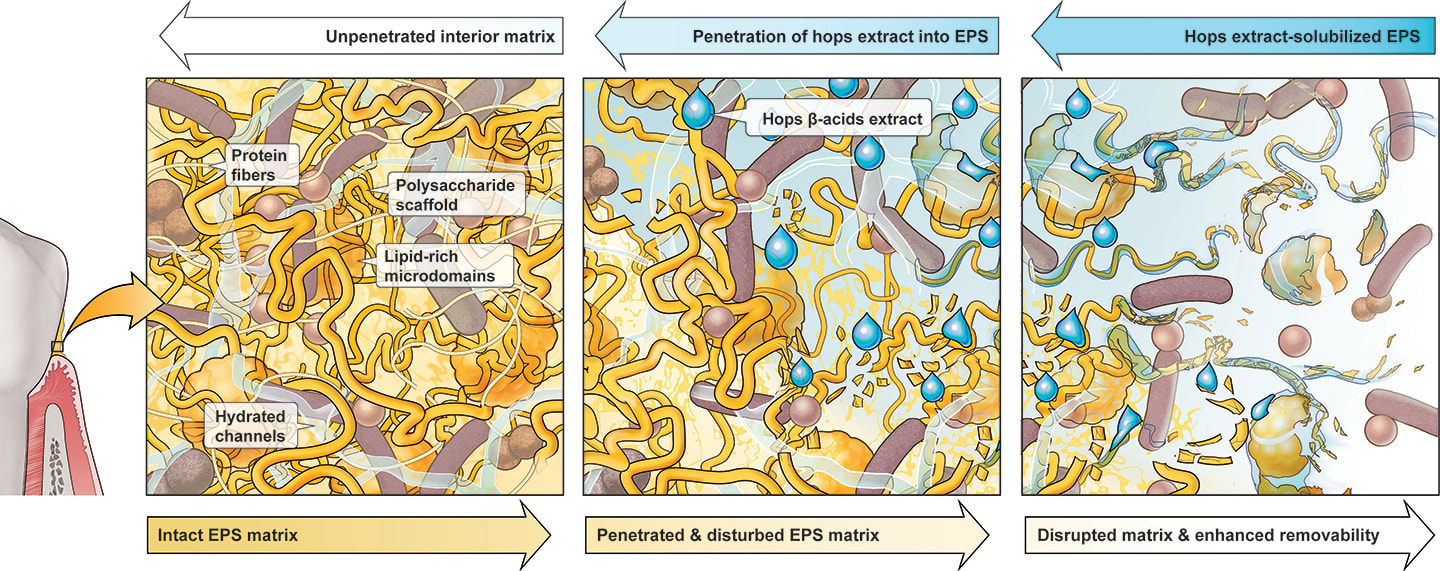
Figure 1
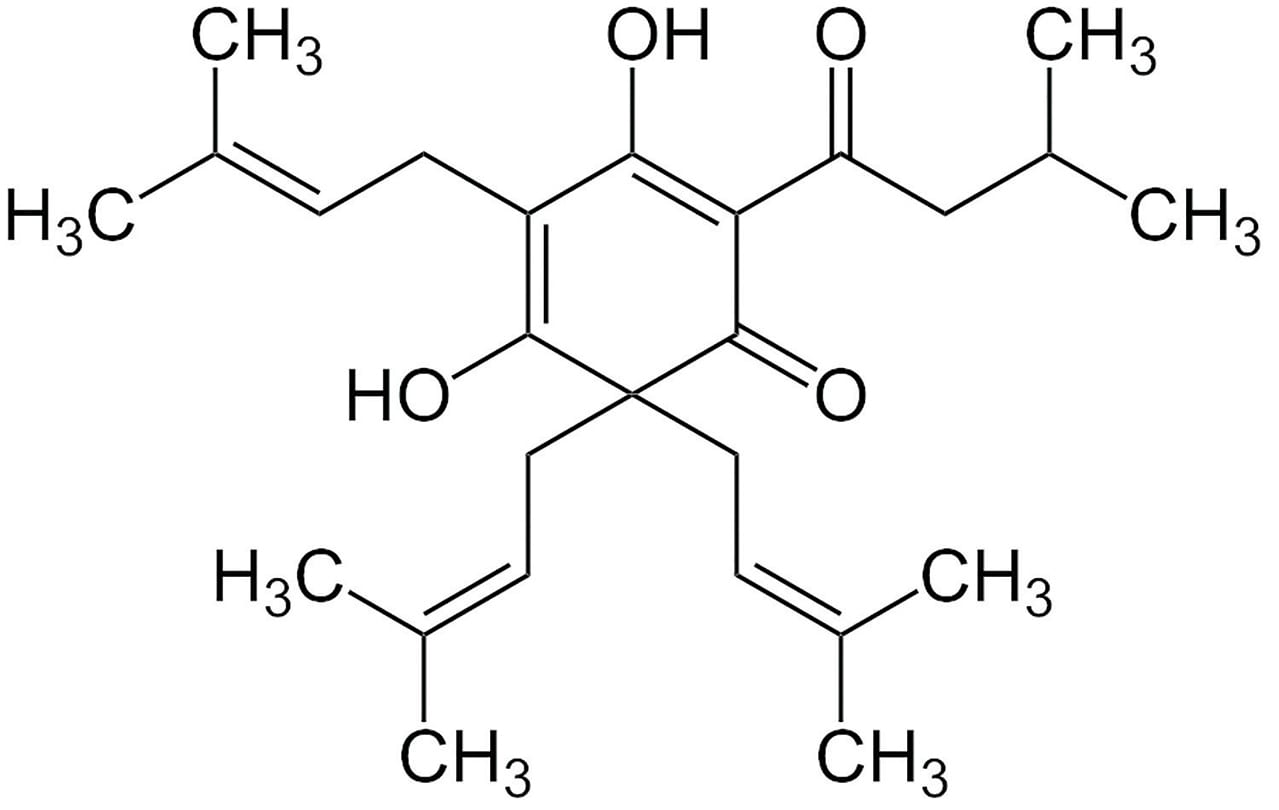
Figure 2
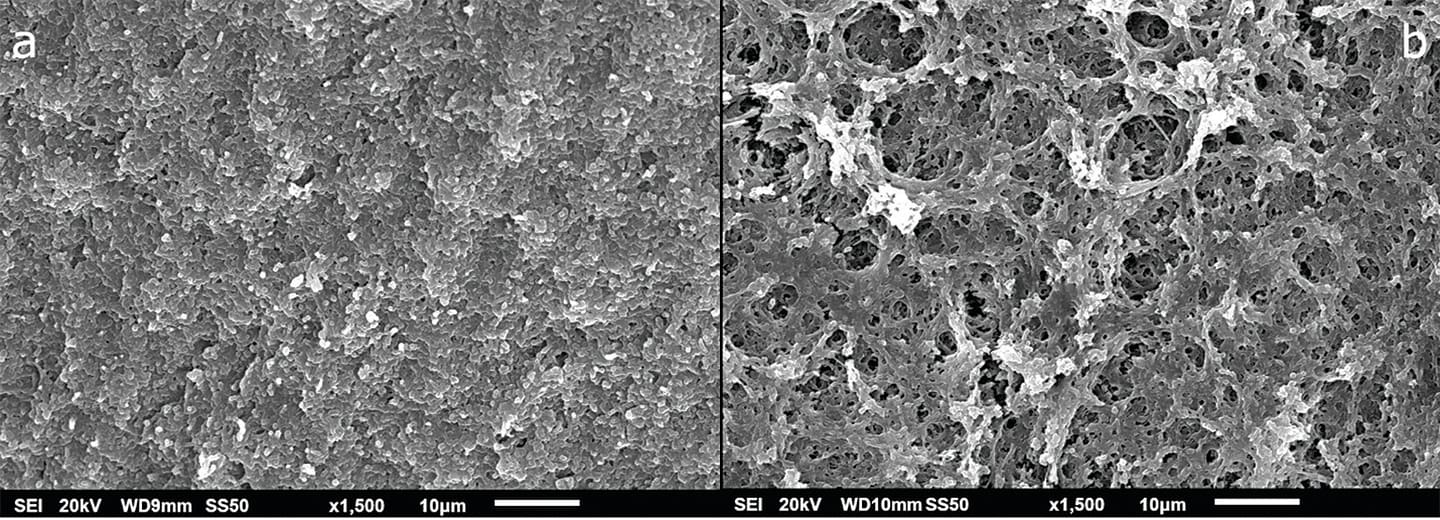
Figure 3
