As a general dentist and clinical educator raised in a family of prosthodontists, Victor Cedillo, DDS, has experienced restorative dentistry in almost every clinical environment, from ideal rubber dam isolation to challenging, high-moisture situations. Early in his career, he worked in a fast-paced, government-insured clinic where efficiency and material selection were critical. Today, he practices in a setting that allows for more controlled isolation and advanced restorative protocols. These experiences, he says, have taught him that the ideal material must perform predictably in the real world.
“For indirect cementation,” says the San Diego practitioner. “I have traditionally used dual-cure resin cements, but I wanted a cement that could simplify the bonding process while offering additional biological benefits. Self-adhesive resin cements addressed some of these challenges by incorporating functional acidic monomers that promote adhesion without requiring separate phosphoric acid-etching or an adhesive.”
Cedillo frequently uses zirconia and porcelain restorations, as well as minimally retentive preparations such as inlays, onlays, short crowns, endocrowns, and veneers. “These cases,” he says, “require careful consideration of both the preparation design and cementation protocol. This is where I find BeautiLink SA particularly valuable.”
BeautiLink SA from Shofu is a dual-cured, self-adhesive resin cement designed for indirect restorations, specifically for zirconia, but also compatible with lithium disilicate, metal, and composite restorations. Cedillo notes that it can be used without a separate adhesive, simplifying the cementation procedure, while Shofu’s BeautiBond® Xtreme can be incorporated when enhanced adhesion is desired, particularly with low-retentive preparations.
“This flexibility is one of the features I appreciate most,” Cedillo says. “Depending on the clinical situation, I can use a simplified self-adhesive protocol or incorporate an adhesive step when I want to maximize bonding. This allows me to adapt the cementation protocol to the preparation rather than forcing every case into the same workflow.”
Another feature that distinguishes BeautiLink SA is its Giomer Technology, which incorporates Shofu’s bioactive proprietary fillers. According to the manufacturer, these fillers provide antibacterial and acid-neutralizing effects by releasing and recharging six beneficial ions, including fluoride, throughout the life of the restoration. This helps reduce caries-causing bacteria present in the preparation or infiltrating the margins, helping to lower crown failure.
Ultimately, BeautiLink SA gives Cedillo greater flexibility in indirect cementation. “A cement,” he suggests, “doesn’t simply hold the restoration in place; it gives me confidence in the biology, bonding, and longevity of the treatment.”
Victor Cedillo, DDS
Private Practice, San Diego, California
Shofu
800-827-4638
shofu.com
Figures and Images
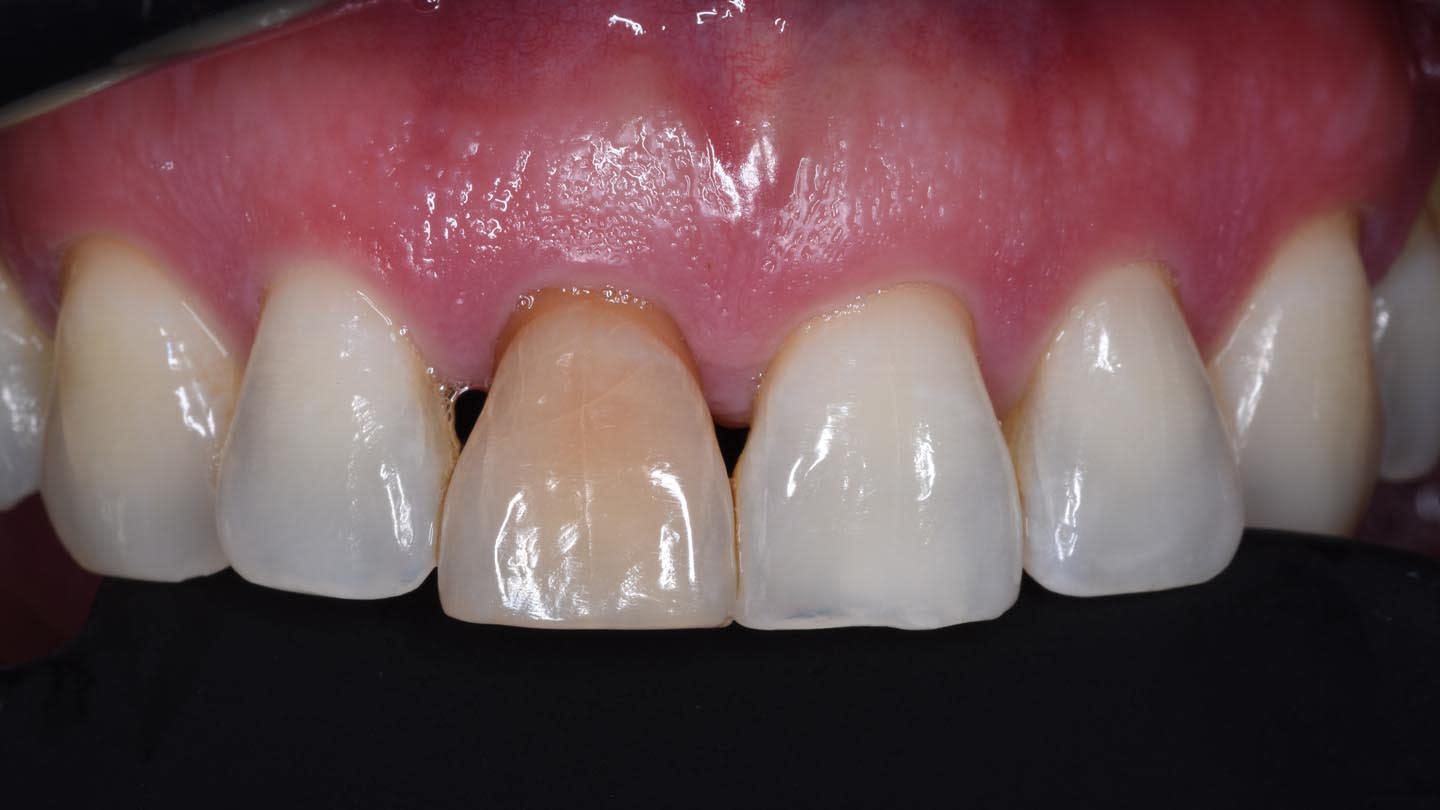
Initial situation
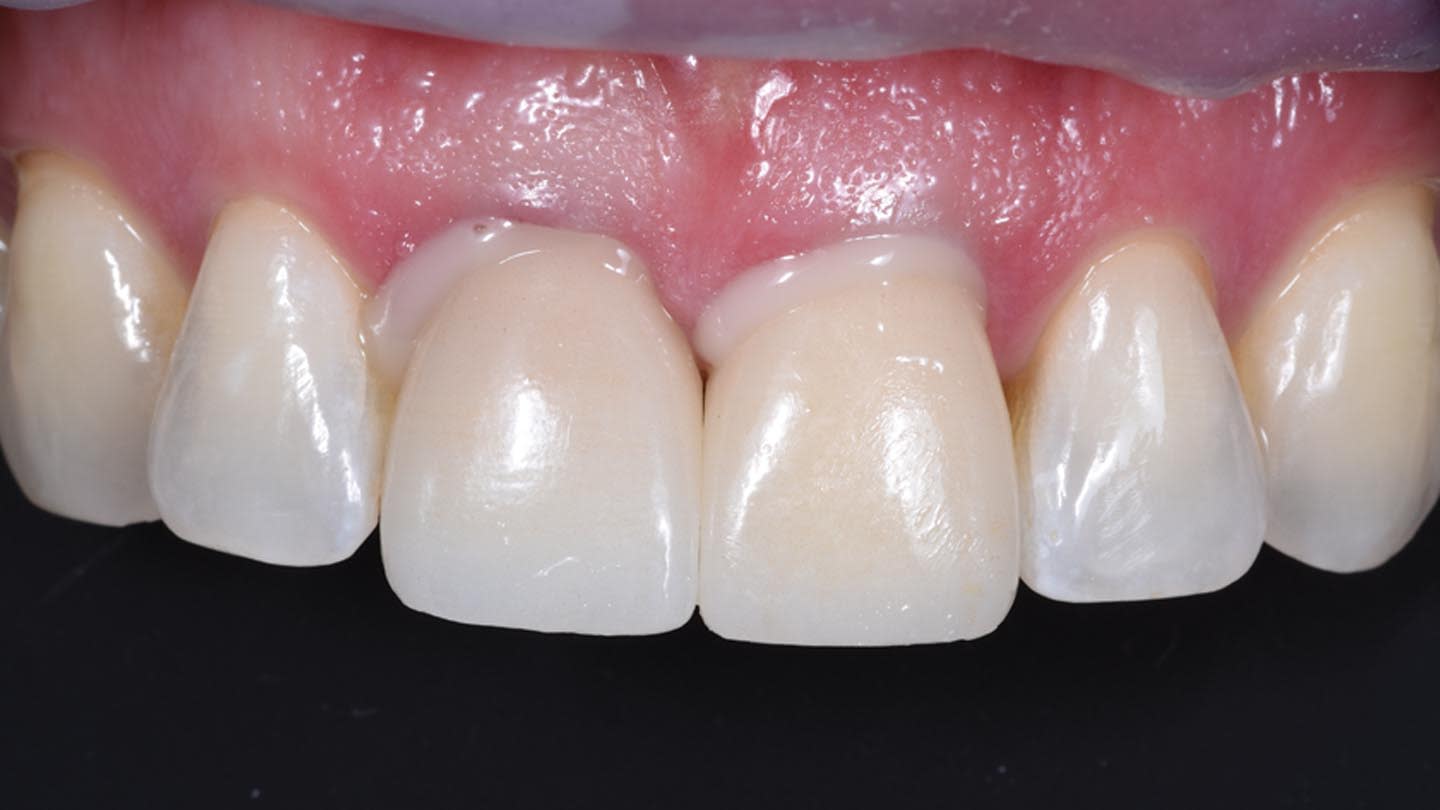
Cementation with BeautiLink SA following crown preparations.
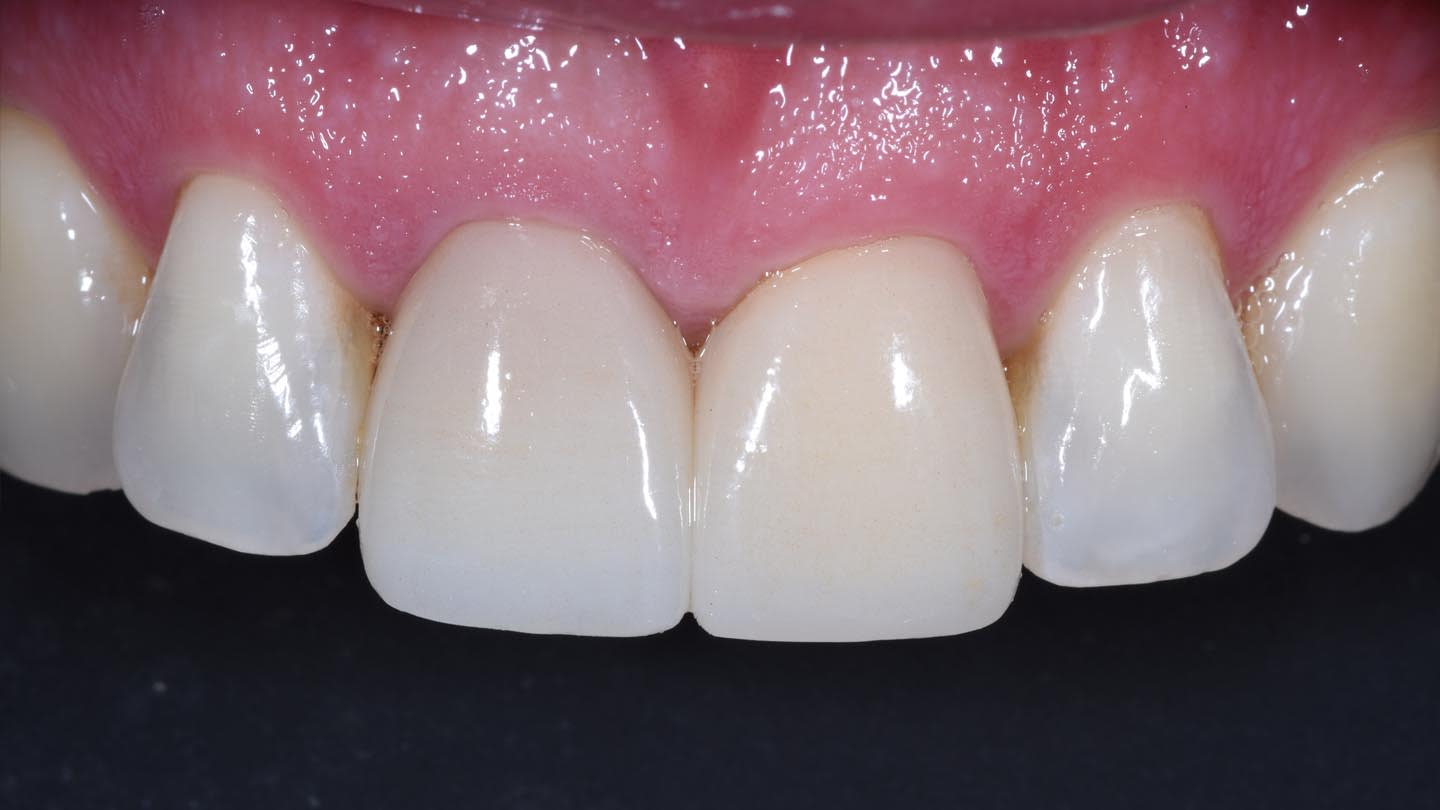
Final result with 5Y zirconia crowns.